“We haul 60 keelboats every November. Fairing runs the barrier programme on all of them inside six weeks. The moisture survey report they hand over is better documentation than most surveyors produce.”
Marine Hull Treatment & Finishing — Est. 2009
Every Layer
Earns Its Place.
Hull Survey
Strip & Blast
Osmotic Cure
Epoxy Barrier
Antifouling
Topside Finish
Gloss Meter Sign-off

4.2 mmAvg. blister depth
23%Hull moisture reading
Station 01
The Survey
Doesn't Lie.
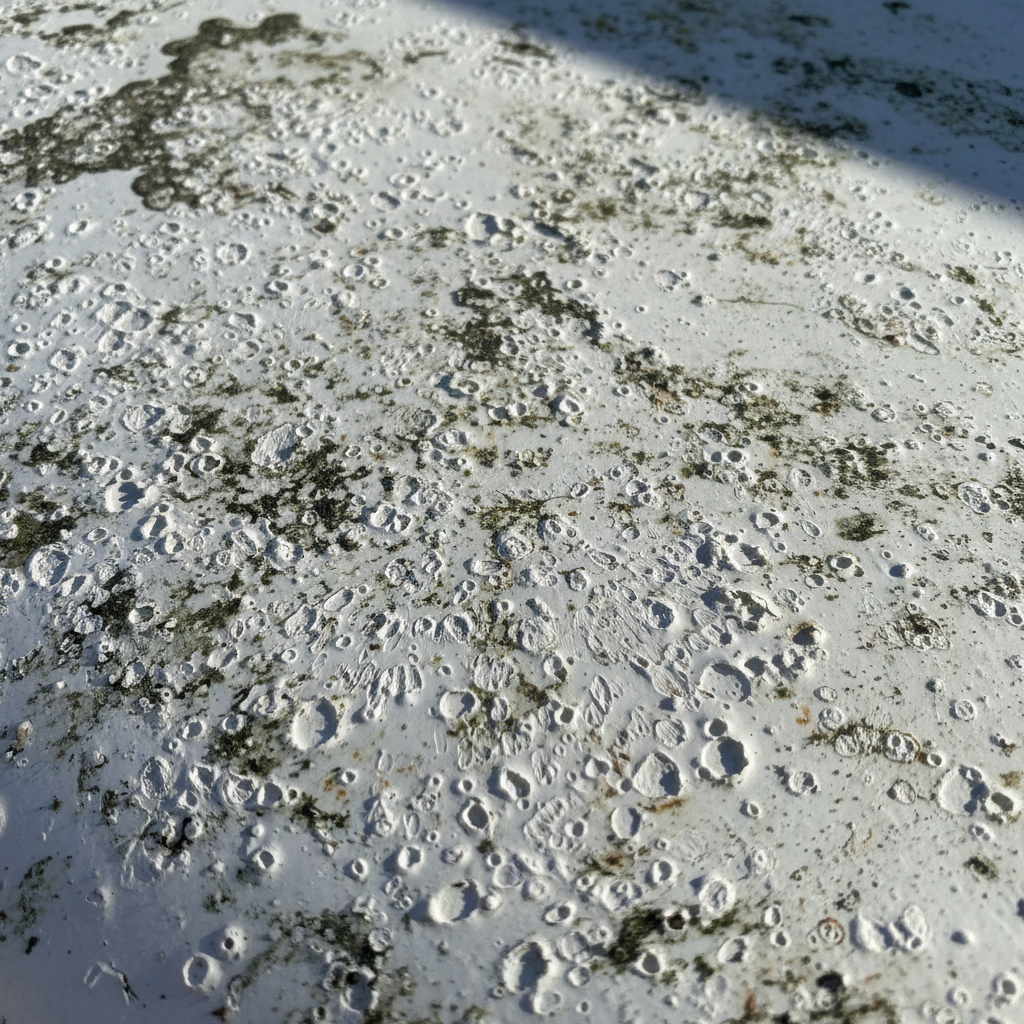
Before a single disc touches gelcoat, we run a full moisture survey — Tramex CME4 across the entire underbody, raking-light inspection for print-through and star cracking, and a tap-test grid for delamination pockets. The report goes to the owner before any work order is written.
Survey methodTramex CME4 + raking light
Threshold for strip>17% moisture content
Report turnaround24 hrs post-haul
Osmotic cure time6–12 weeks (climate-controlled)
"They found 14 blisters my own surveyor missed. The report was six pages with photo evidence. That's when I knew."
— Marcus Webb, S/V Meridian, 42ft sloop
Station 02
Bare Substrate
or We Don't Build.
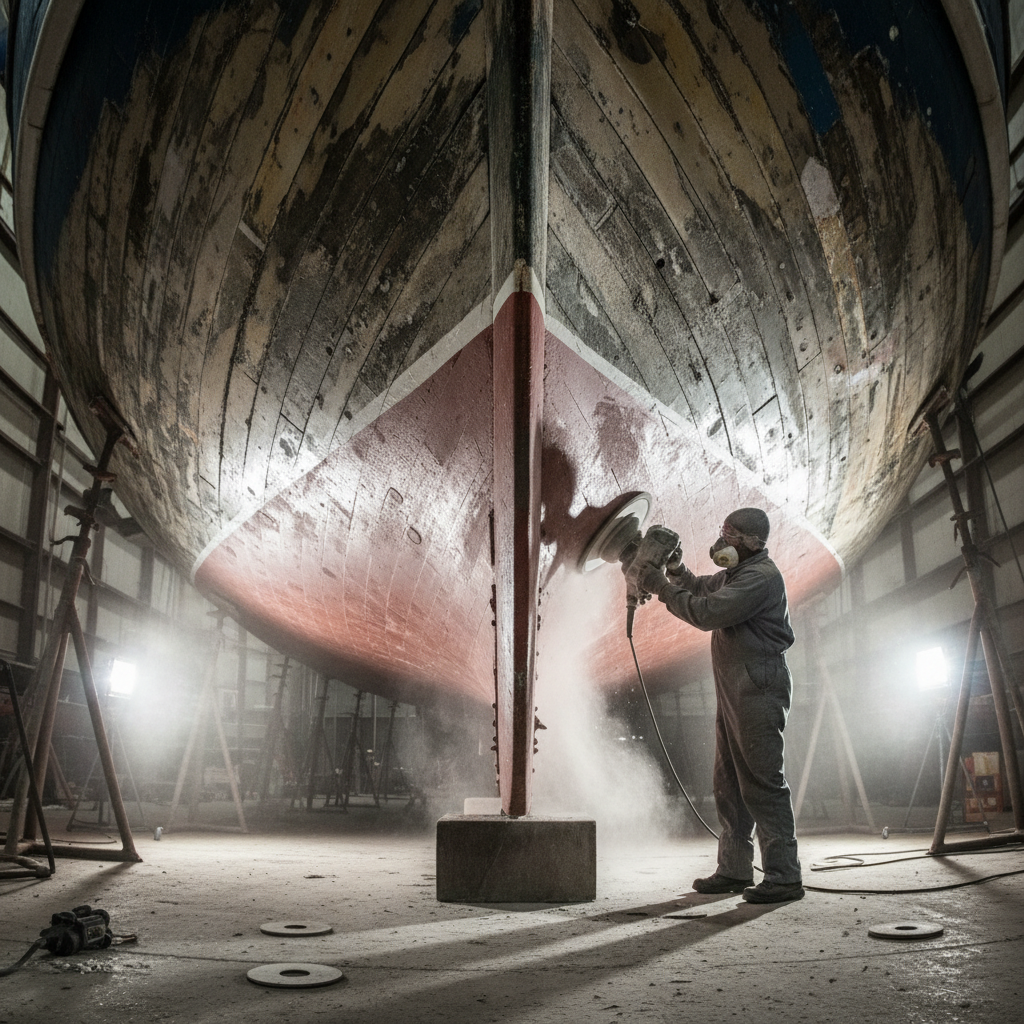
GRP hulls get 40-grit disc-sanding to SSPC-SP1 equivalent — every micron of old antifouling, primer, and degraded gelcoat removed before the moisture meter clears. Steel gets abrasive blast to Sa 2.5 white metal, profiled to 60–80 microns Rz. Aluminum gets sweep blast to 25–40 microns. No shortcuts. No skim-coating over contamination.
GRP preparation40-grit, SSPC-SP1
Steel blast standardSa 2.5 white metal
Blast profile (steel)60–80 µm Rz
Recoat window<4 hrs after blast
Sa 2.5Blast standard (steel)
72 µmSurface profile Rz
250 µmDFT per coat
87 GUGloss meter sign-off
127 g/LVOC (EPA Method 24)
Station 03
Six Coats.
No Exceptions.
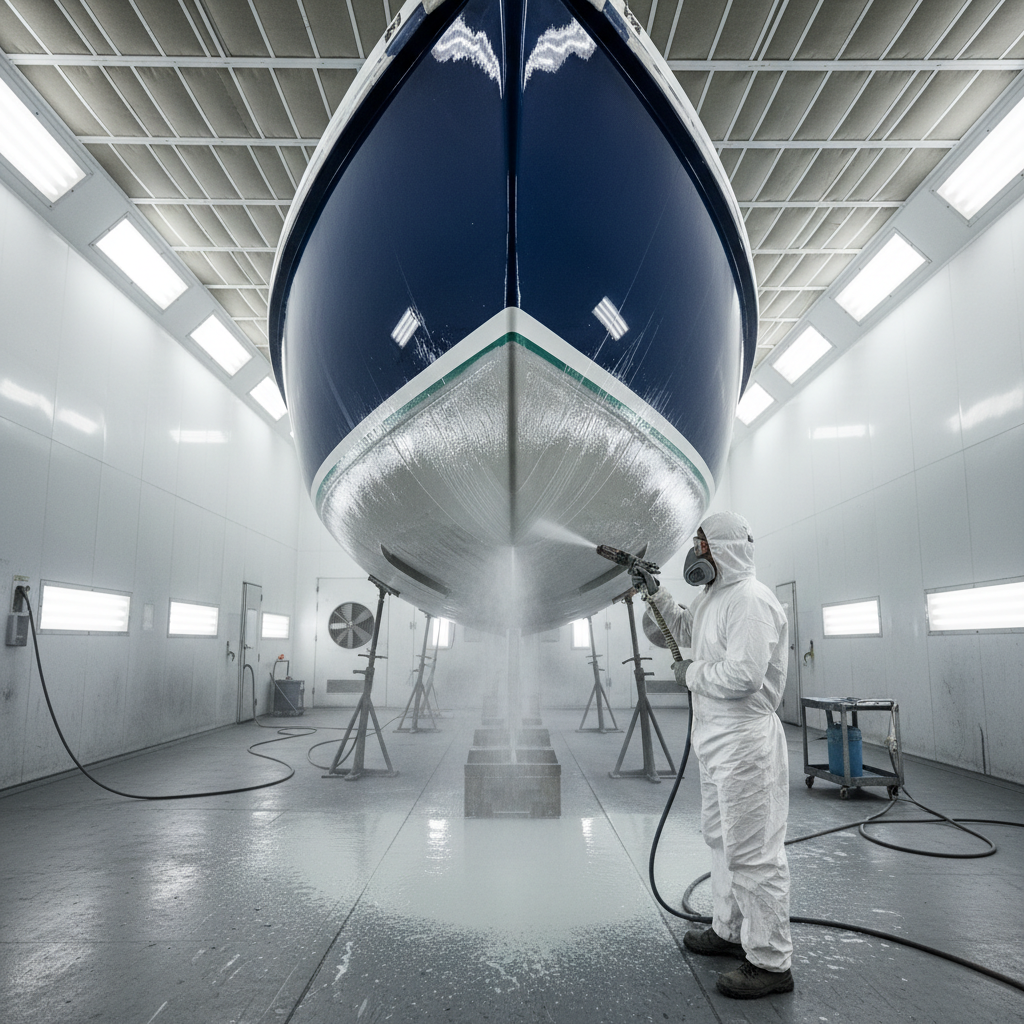
Interprotect 2000E applied in six cross-hatched coats at 250 µm DFT each — total system builds to 1,500 µm before antifouling goes on. Each coat is pulled with a Positector 6000 before the next is approved. Recoat windows are tracked by batch ticket, not by feel. The curing shed holds 55–65°F with forced air.
ProductInterprotect 2000E
Coats applied6 × 250 µm DFT
Total system DFT1,500 µm
Cure temp range55–65°F forced air
QC instrumentPositector 6000 DFT gauge
1,500 µm
Barrier system DFT
87 GU
Min. gloss sign-off
Sa 2.5
Steel blast standard
340+
Hulls completed
Free Reference
Antifouling Selection
by Vessel Profile.
Five product families compared across speed range, haul-out cycle, and water temperature. No form required — this is the kind of information we think you should have before calling anyone.
| Product | Type | Speed Range | Haul Cycle | Water Temp | Cu Content | Notes |
|---|---|---|---|---|---|---|
| Micron ExtraRec. | Self-polishing copolymer | 0–8 kts | Annual | 40–85°F | 38% CuO | Ideal for low-activity coastal moorings, monofilament-friendly |
| VC Offshore | Thin-film ablative | 8–20 kts | Biennial | 45–90°F | 67% CuO | Hard-water performance, multi-season build-up tolerated |
| Trilux 33 | Hard modified epoxy | 0–6 kts | Annual | 35–80°F | 40% CuO | Trailered boats, excellent relaunch adhesion after dry storage |
| Seajet 034 ShogunRec. | Hybrid SPC | 6–25 kts | 18–24 months | 40–95°F | 55% CuO | Commercial fleet default — low drag, high-fouling tropical waters |
| PropSpeed | Foul-release (non-biocidal) | 8 kts+ (running) | 24 months | All ranges | None | Props, shafts, trim tabs only — biofouling releases under thrust |
* Product selection depends on local regulations, water temperature, and hull substrate. Download the full Coating Spec Guide for system-by-system application data and recoat windows.
From the Yard
“Lost nearly half a knot to fouling last season. After the Shogun system they put on at haul-out, we came out of the water in spring and held hull speed in 85°F water for eleven months straight.”
“The osmotic blisters had been there for two seasons. Three other yards quoted 'grind and fill.' Fairing stripped to bare glass, dried it for eight weeks, and built the system up properly. Two years later, nothing.”
Free Technical Resource
The Coating
Spec Guide.
47 pages. System-by-system application data, recoat windows, surface prep standards, and mil thickness targets — the same document we hand our own applicators before they open a can.
6 barrier coat systems
Steel vs. GRP vs. aluminum
Recoat window tables
Antifouling selector matrix
VOC & regulatory notes
Gloss finish spec sheet
No spam. One email with your PDF. Unsubscribe any time.